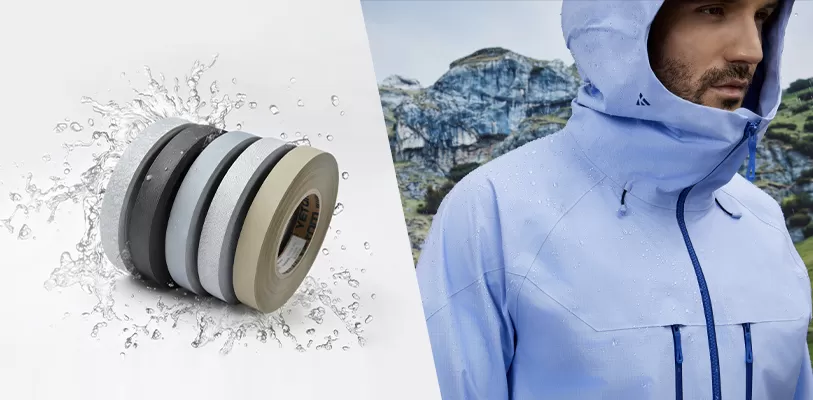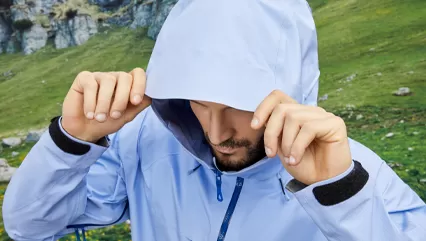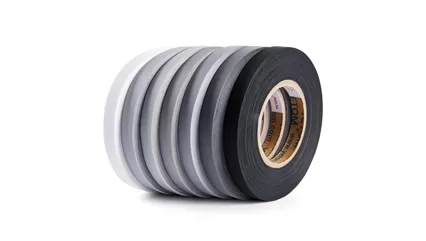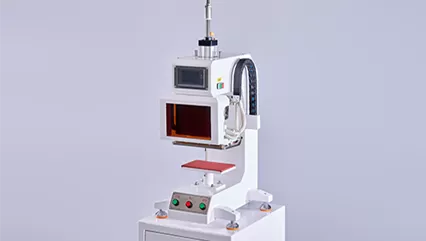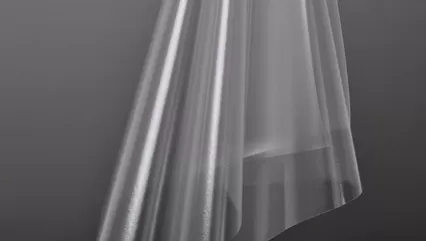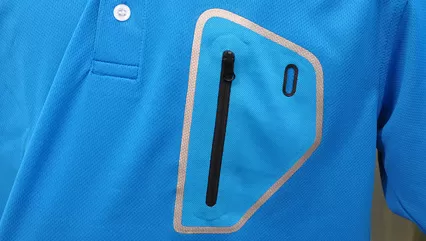
PU seam sealing tape is the most common choice for waterproof jackets, rainwear, outdoor apparel, and many PU-coated fabrics. TPU seam sealing tape is better for soft, elastic, premium, and environmentally preferred waterproof garments such as stretch jackets, sportswear, and seamless apparel. PVC seam sealing tape is mainly used for PVC-coated fabrics, industrial rainwear, waterproof covers, bags, and protective products where PVC compatibility is more important than breathability or soft hand feel.
The right choice depends on the fabric coating, garment application, washing requirement, flexibility, production temperature, durability target, and total cost. A tape that works well on one fabric may peel, crack, wrinkle, or fail waterproof testing on another. For buyers and garment manufacturers, the key is not simply choosing “the strongest” tape, but choosing the tape that matches the fabric and end-use conditions.
PU vs TPU vs PVC Seam Sealing Tape: Quick Comparison
| Item | PU Seam Sealing Tape | TPU Seam Sealing Tape | PVC Seam Sealing Tape |
|---|
| Full Name | Polyurethane seam sealing tape | Thermoplastic polyurethane seam sealing tape | Polyvinyl chloride seam sealing tape |
| Best For | Waterproof jackets, rainwear, outdoor apparel | Stretch garments, premium waterproof apparel, seamless garments | PVC-coated fabrics, industrial rainwear, waterproof covers |
| Flexibility | Good | Excellent | Moderate |
| Hand Feel | Soft to medium | Soft and elastic | Usually stiffer |
| Wash Resistance | Good when properly matched | Very good for suitable applications | Application-dependent |
| Fabric Compatibility | PU-coated and many waterproof breathable fabrics | TPU laminates, stretch fabrics, high-performance textiles | PVC-coated materials |
| Typical Cost | Medium | Medium to high | Low to medium |
| Common Structure | 2-layer or 3-layer | Film tape, adhesive film, elastic tape, or textile-backed tape | PVC-compatible film tape |
| Main Advantage | Balanced performance and cost | Elasticity, softness, durability, premium feel | Strong compatibility with PVC-coated materials |
What Is PU Seam Sealing Tape?
PU seam sealing tape is one of the most widely used seam waterproofing materials in the garment industry. It is commonly applied to stitched seams by hot-air seam sealing machines to prevent water from passing through needle holes.
PU tape is popular because it offers a practical balance of adhesion, flexibility, waterproof performance, processing stability, and cost. For many waterproof jackets, raincoats, outdoor shells, and protective garments, PU seam sealing tape is the standard starting point.
Common Applications of PU Seam Sealing Tape
Waterproof jackets
Raincoats and ponchos
Outdoor apparel
Hiking jackets
Windbreakers with waterproof coating
Protective clothing
Waterproof bags and fabric accessories
PU-coated fabrics and many waterproof breathable textiles
Advantages of PU Seam Sealing Tape
Wide fabric compatibility: PU tape works well with many PU-coated and waterproof breathable fabrics.
Good waterproof performance: When properly applied, it can effectively seal stitched seams and help garments pass waterproof testing.
Balanced cost: It is usually more economical than many high-end TPU solutions while offering reliable performance.
Good flexibility: PU tape is suitable for many apparel applications where comfort and movement are important.
Stable production performance: It is widely used on standard hot-air taping machines and is familiar to many garment factories.
Limitations of PU Seam Sealing Tape
Not always the best choice for highly elastic fabrics
May not bond well to every coating or membrane
Lower stretch recovery than TPU tape
Performance depends strongly on adhesive formula and machine settings
Cheaper grades may show weaker washing durability
What Is TPU Seam Sealing Tape?
TPU seam sealing tape is made from thermoplastic polyurethane materials. Compared with standard PU tape, TPU tape is often valued for its elasticity, softness, flexibility, abrasion resistance, and premium hand feel.
TPU is especially useful in applications where the garment needs to move, stretch, bend, or maintain comfort during active use. It is commonly used in technical sportswear, waterproof breathable garments, seamless garments, footwear, and high-performance textile bonding.
Common Applications of TPU Seam Sealing Tape
Stretch waterproof jackets
Softshell garments
Sportswear and activewear
Seamless garments
Outdoor technical apparel
Footwear uppers and waterproof shoe components
Premium waterproof breathable fabrics
Garments requiring soft, elastic seam finishing
Advantages of TPU Seam Sealing Tape
Excellent elasticity: TPU tape can move better with stretch fabrics and reduce cracking or lifting.
Soft hand feel: It is suitable for garments where comfort is a key selling point.
Good durability: High-quality TPU tape can perform well under flexing, washing, and repeated movement.
Premium positioning: It is often used in higher-value garments and advanced textile applications.
Suitable for seamless bonding: TPU hot melt films and tapes are widely used in seamless garment construction.
Limitations of TPU Seam Sealing Tape
Usually higher cost than basic PU or PVC tape
Requires careful matching with fabric surface
Processing temperature and pressure must be controlled accurately
Not always necessary for simple rainwear
Wrong TPU grade may cause bonding, yellowing, or appearance issues
What Is PVC Seam Sealing Tape?
PVC seam sealing tape is designed mainly for PVC-coated fabrics and related waterproof materials. It is commonly used where the base fabric or coating is PVC and where compatibility with PVC surfaces is more important than soft touch or breathable performance.
PVC tape is less common in premium waterproof breathable outdoor jackets, but it remains practical for industrial, utility, and cost-sensitive waterproof products.
Common Applications of PVC Seam Sealing Tape
PVC rainwear
Industrial waterproof clothing
Waterproof aprons
Protective covers
Waterproof bags
Tents and tarpaulin products
PVC-coated fabric products
Outdoor covers and utility waterproof items
Advantages of PVC Seam Sealing Tape
Good compatibility with PVC-coated fabrics: This is the main reason to choose PVC tape.
Practical waterproofing: It can provide reliable seam sealing for PVC-based products.
Cost-effective: PVC tape can be economical for industrial and large-volume applications.
Suitable for heavy-duty materials: It is often used with thicker waterproof fabrics, covers, and protective items.
Limitations of PVC Seam Sealing Tape
Usually stiffer than PU or TPU tape
Not ideal for breathable outdoor jackets
Less suitable for soft, stretch, or premium garments
Environmental requirements may limit PVC use in some markets
Wrong application settings may cause poor appearance or weak bonding
How to Choose Between PU, TPU, and PVC Seam Sealing Tape
The best way to choose is to start from the fabric and product application. The tape must match the coating or membrane that it bonds to. A buyer should not choose TPU only because it sounds more advanced, or PU only because it is common, or PVC only because it is cheaper.
Choose PU Seam Sealing Tape If:
You are producing standard waterproof jackets or rainwear.
Your fabric has a PU coating or PU-compatible membrane.
You need a balance between cost and performance.
The garment does not require high stretch recovery.
You want stable production on common hot-air taping machines.
You need 2-layer or 3-layer tape options for outdoor apparel.
Choose TPU Seam Sealing Tape If:
You are producing stretch waterproof garments.
The garment needs soft hand feel and elastic movement.
You are making seamless garments, sportswear, or premium outdoor apparel.
The fabric is TPU-laminated or TPU-compatible.
You need better flexibility under repeated bending.
The product is positioned in a higher-value market.
Choose PVC Seam Sealing Tape If:
Your fabric is PVC-coated.
You are producing industrial rainwear, waterproof covers, bags, or protective products.
Breathability and soft touch are not the main priorities.
You need practical waterproofing for PVC-based materials.
Cost control and coating compatibility are key concerns.
Application-Based Recommendation Table
| Product Application | Recommended Tape Type | Reason |
|---|
| Basic rain jacket | PU seam sealing tape | Good waterproof performance with reasonable cost |
| Premium hiking shell | PU or TPU 3-layer seam sealing tape | Better durability, comfort, and appearance |
| Stretch waterproof jacket | TPU seam sealing tape | Better elasticity and movement recovery |
| Seamless sportswear | TPU hot melt tape or film | Soft bonding and flexible garment construction |
| PVC raincoat | PVC seam sealing tape | Better compatibility with PVC-coated fabric |
| Industrial waterproof cover | PVC or application-specific PU tape | Depends on coating type and durability requirement |
| Ski jacket | 3-layer PU or TPU seam sealing tape | Better resistance to abrasion, washing, and cold conditions |
| Protective clothing | PU, TPU, or PVC depending on fabric | Selection must follow fabric coating and performance standards |
Which Tape Has Better Waterproof Performance?
Waterproof performance does not depend only on whether the tape is PU, TPU, or PVC. It depends on the complete system: fabric coating, adhesive formula, seam design, tape width, machine temperature, pressure, speed, and testing conditions.
A properly matched PU tape can outperform a poorly matched TPU tape. A PVC tape can be excellent on PVC-coated fabric but unsuitable on a breathable outdoor fabric. For waterproof jackets, the best tape is the one that bonds firmly to the specific fabric and remains stable after washing, flexing, and use.
Which Tape Is More Durable?
TPU seam sealing tape is often preferred for applications requiring flexibility, elasticity, and repeated movement. High-quality 3-layer PU tape can also provide strong durability for technical outerwear. PVC tape can be durable on PVC-coated industrial fabrics but may not provide the comfort or softness needed for apparel worn close to the body.
| Durability Factor | PU Tape | TPU Tape | PVC Tape |
|---|
| Repeated bending | Good | Excellent | Moderate |
| Stretch recovery | Moderate | Excellent | Low to moderate |
| Washing durability | Good when matched correctly | Very good for suitable fabrics | Depends on application |
| Abrasion resistance | Good, especially 3-layer tape | Good to excellent | Moderate to good on heavy PVC materials |
| Low-temperature flexibility | Good depending on formula | Usually strong | May become stiffer |
Which Tape Feels Softer on Waterproof Garments?
For garment comfort, TPU tape usually provides the softest and most elastic feel. PU tape also offers good softness and is widely accepted in waterproof jackets. PVC tape is typically less soft and less suitable for premium outerwear where comfort and inner appearance matter.
If the garment is a high-end waterproof breathable jacket, softshell, sportswear item, or seamless garment, TPU or textile-backed 3-layer tape is often a better option. If the product is a basic rain jacket, PU tape may provide enough comfort at a better cost.
Which Tape Is Better for Washing Resistance?
Washing resistance depends on adhesive bonding and fabric compatibility. TPU and high-quality PU seam tapes can both perform well in washable garments when properly selected and applied. PVC tape may be suitable for PVC-based products, but it is not usually the first choice for washable premium outdoor apparel.
Buyers should test tape after the expected washing conditions, not only immediately after taping. Some common problems appear only after laundering, drying, folding, and repeated use.
Recommended Tests Before Bulk Production
Initial peel strength test
Waterproof pressure test after seam sealing
Washing cycle test
Peel strength after washing
Flexing or bending test
Low-temperature test for winter garments
Visual inspection for wrinkles, bubbles, cracking, or delamination
Cost Differences: PU vs TPU vs PVC Tape
In general, PVC tape can be economical for PVC-coated industrial products, PU tape offers balanced cost-performance for apparel, and TPU tape often costs more because of its softness, elasticity, and higher-performance positioning.
However, unit price should not be the only factor. The real cost includes production efficiency, rejection rate, rework, washing failure, customer complaints, and long-term product reputation.
| Cost Consideration | PU Tape | TPU Tape | PVC Tape |
|---|
| Material Cost | Medium | Medium to high | Low to medium |
| Processing Stability | Good | Good with correct settings | Good on compatible PVC materials |
| Risk of Wrong Selection | Medium | Medium if fabric is not compatible | High if used on non-PVC apparel fabrics |
| Best Value Area | Waterproof jackets and rainwear | Stretch and premium garments | PVC-coated waterproof products |
Environmental and Market Considerations
Material choice may also be influenced by buyer requirements, brand standards, and market regulations. Some apparel brands prefer TPU or selected PU solutions for premium garments because they can support softer product design and more modern material positioning.
PVC can still be useful for specific industrial waterproof products, but some buyers may avoid it for apparel due to environmental or compliance considerations. If your products are sold to international brands, retailers, or regulated markets, confirm material restrictions before selecting PVC-based tape.
Common Mistakes When Comparing PU, TPU, and PVC Seam Tape
Assuming TPU Is Always Better
TPU is excellent for many premium and stretch applications, but it is not automatically the best choice for every fabric. If the fabric surface is not TPU-compatible, bonding may still fail.
Using PVC Tape on Breathable Outdoor Fabrics
PVC tape is mainly intended for PVC-coated materials. It is usually not suitable for premium waterproof breathable jackets where softness, breathability, and inner appearance are important.
Choosing PU Tape Without Checking the Coating
PU tape is widely used, but not every waterproof fabric has the same inner coating. Testing is still necessary before bulk production.
Ignoring Hot-Air Taping Conditions
Different tape materials may require different temperature, pressure, and speed settings. A tape can fail because the machine settings are wrong, even if the material itself is suitable.
Only Testing Initial Adhesion
Initial bonding can look strong, but washing, flexing, and aging can reveal hidden problems. Buyers should test the tape under realistic use conditions.
How to Work With a Seam Tape Supplier
To receive an accurate recommendation, provide detailed fabric and product information. A professional supplier should not recommend tape based only on garment name. “Waterproof jacket” is not enough because different jackets use different coatings, membranes, seam structures, and performance standards.
Information to Provide Before Sample Testing
Fabric coating or membrane type
Fabric structure: 2-layer, 2.5-layer, or 3-layer
Fabric thickness and weight
Stretch requirement
Garment application
Required tape width and color
Target waterproof standard
Washing test requirement
Hot-air taping machine type
Current problem, such as peeling, leakage, cracking, or wrinkling
FAQ: PU, TPU, and PVC Seam Sealing Tape
Is PU or TPU seam sealing tape better for waterproof jackets?
PU tape is suitable for many standard waterproof jackets and offers good cost-performance. TPU tape is better for stretch, soft, premium, and high-flexibility garments. The best choice depends on the fabric coating and product requirement.
Can TPU seam sealing tape replace PU tape?
Sometimes, but not always. TPU tape may improve softness and elasticity, but it must be compatible with the fabric surface and production process. Sample testing is required before replacement.
When should I use PVC seam sealing tape?
PVC seam sealing tape should be used mainly for PVC-coated fabrics, such as PVC rainwear, waterproof covers, bags, tarpaulin products, and industrial waterproof materials.
Which seam tape is best for stretch fabric?
TPU seam sealing tape is usually the best choice for stretch fabric because it offers better elasticity and movement recovery than standard PU or PVC tape.
Which seam tape is most cost-effective?
For waterproof apparel, PU seam sealing tape is often the most cost-effective option. For PVC-coated products, PVC tape may be more practical. For premium stretch garments, TPU tape may provide better long-term value even if the unit price is higher.
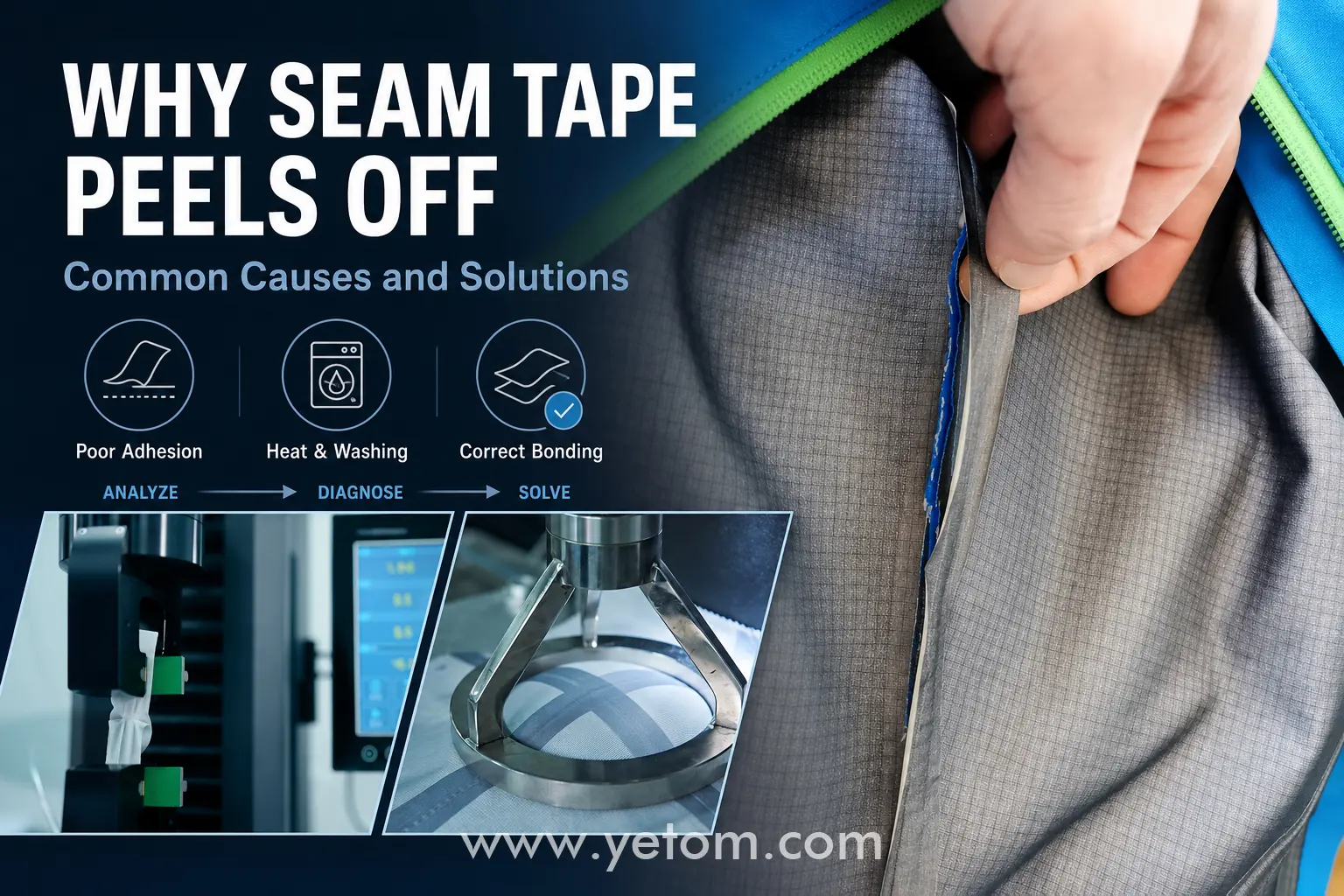
Why does seam tape peel after washing?
Peeling after washing may be caused by incompatible adhesive, wrong fabric coating, insufficient taping temperature, low pressure, fast machine speed, poor tape quality, or washing conditions beyond the tape’s performance range.
Do PU, TPU, and PVC tapes use the same machine settings?
No. Different materials and adhesive systems may require different hot-air temperature, pressure, speed, and nozzle settings. Always follow supplier recommendations and adjust based on actual fabric testing.
Final Recommendation
Choose PU seam sealing tape for most waterproof jackets, rainwear, and PU-coated outdoor garments when you need balanced performance, cost, and production stability.
Choose TPU seam sealing tape for stretch fabrics, seamless garments, softshells, sportswear, premium waterproof apparel, and applications where elasticity and comfort are important.
Choose PVC seam sealing tape for PVC-coated fabrics, industrial rainwear, waterproof covers, bags, and utility products where PVC compatibility is the main requirement.
Before bulk ordering, test the tape on the actual fabric with real seam construction and production machine settings. This is the most reliable way to confirm waterproof performance, adhesion strength, washing durability, appearance, and long-term value.
 中文
中文 English
 français
 Deutsch
 tiếng việt
 Indonesia
 বাঙালি