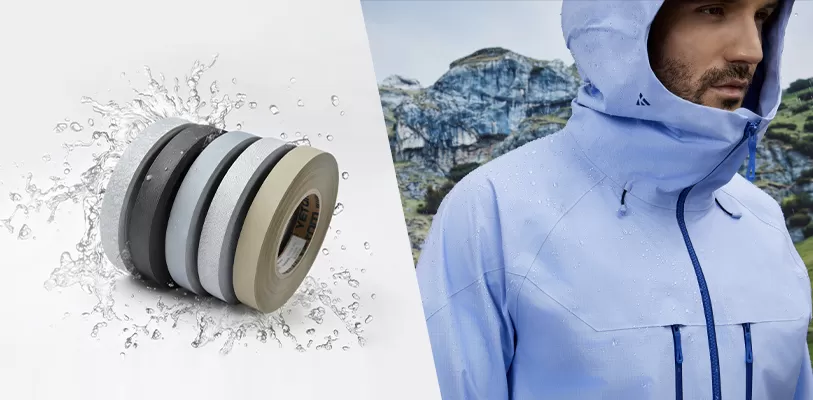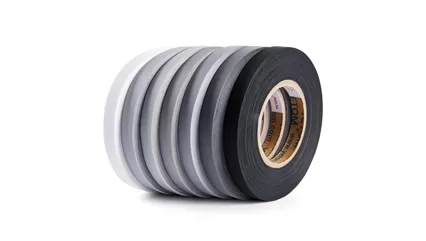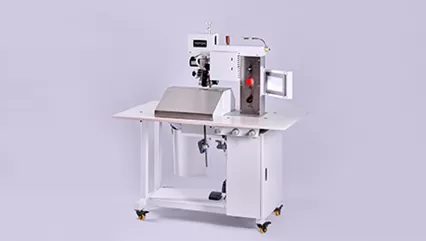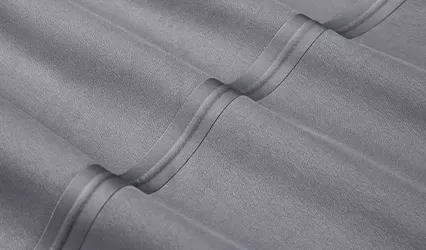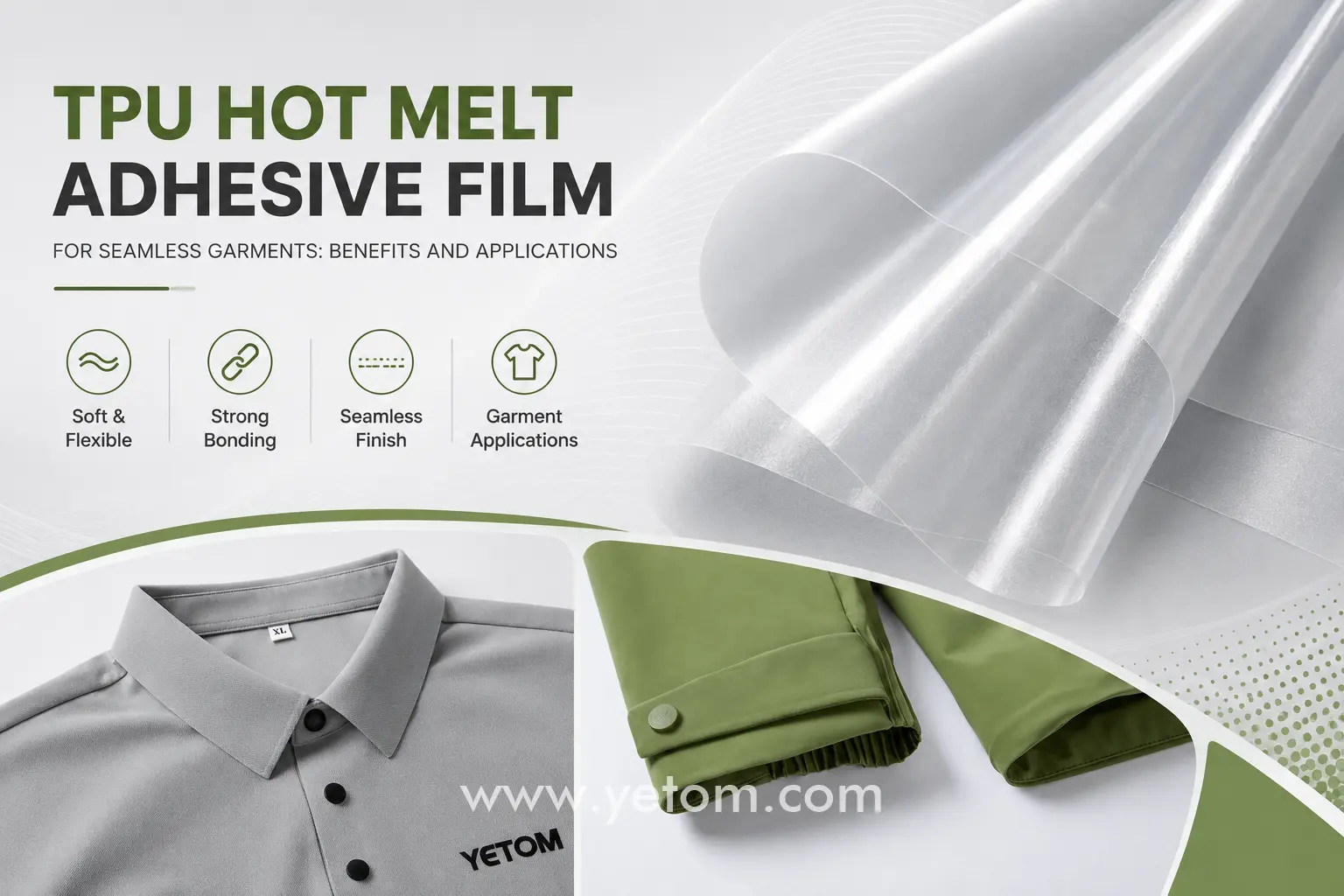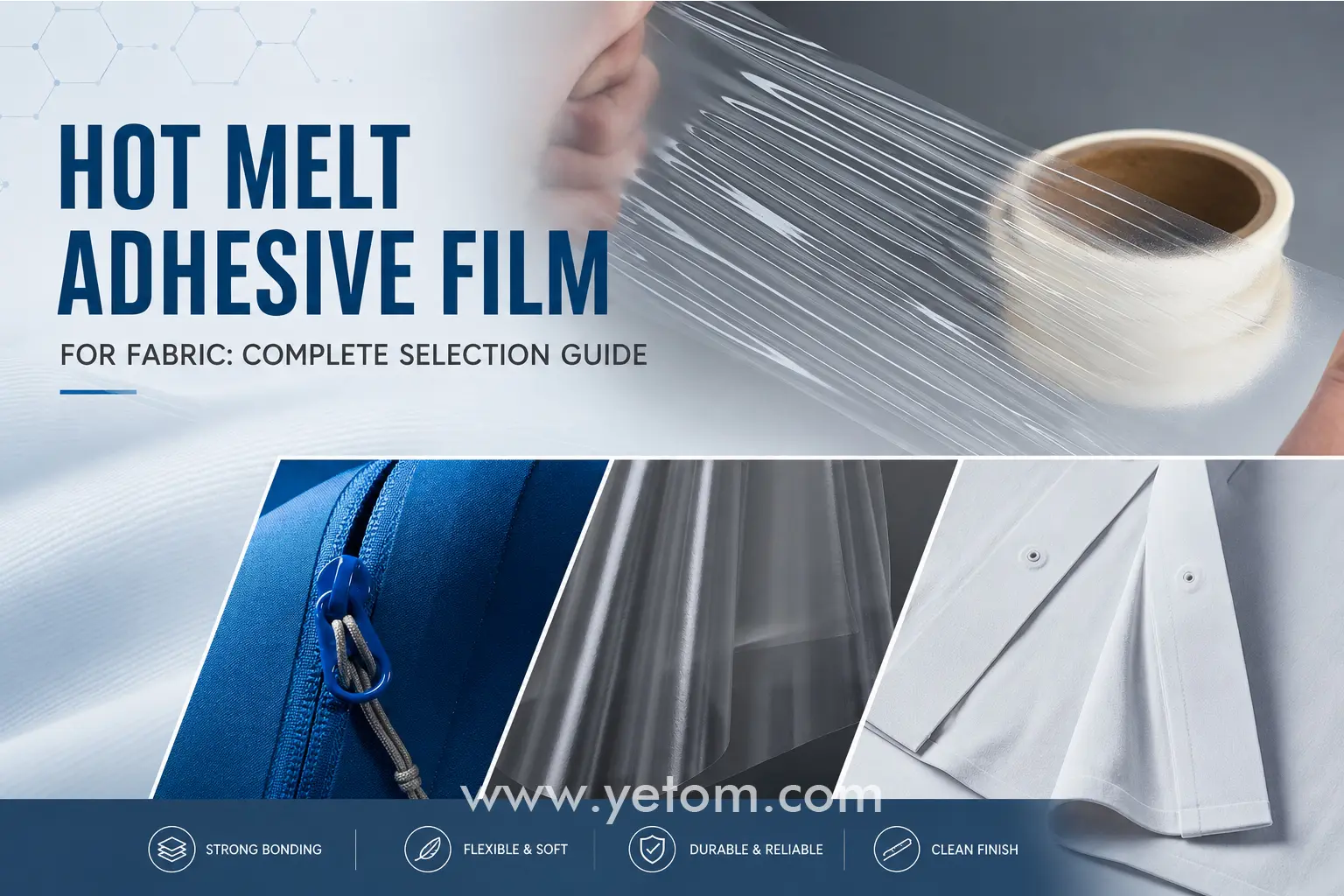
To choose the right hot melt adhesive film for fabric, first confirm the fabric material, bonding method, washing requirement, stretch level, hand feel, activation temperature, and final application. TPU hot melt adhesive film is often preferred for soft, elastic, washable garments and seamless apparel. PES and PA adhesive films are commonly used for durable textile bonding, embroidery patches, labels, and interlining applications. EVA adhesive film is usually more economical and suitable for lower-temperature or cost-sensitive bonding, but it is not always ideal for high-performance garments.
For apparel brands, garment factories, footwear manufacturers, and textile product developers, the correct adhesive film can improve production efficiency, replace sewing in selected areas, reduce bulk, enhance comfort, and create a cleaner appearance. However, the wrong film may cause delamination, stiff hand feel, yellowing, poor washing resistance, weak bonding, or fabric damage during heat pressing.
What Is Hot Melt Adhesive Film for Fabric?
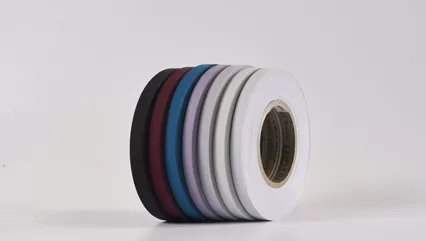
Hot melt adhesive film for fabric is a thin thermoplastic adhesive layer used to bond textiles, membranes, foams, leather, nonwovens, labels, patches, and other flexible materials. It is usually activated by heat and pressure, then cools down to form a stable bond.
Unlike liquid glue, hot melt adhesive film is clean, uniform, solvent-free in application, easy to cut, and suitable for automated or semi-automated production. It is widely used in seamless garments, sportswear, underwear, outdoor apparel, footwear, protective clothing, embroidery badges, garment labels, and textile lamination.
| Film Type | Best For | Main Advantages | Key Limitations |
|---|
| TPU Hot Melt Adhesive Film | Seamless garments, sportswear, underwear, stretch fabrics, footwear | Soft, elastic, washable, good stretch recovery | Usually higher cost than EVA an
d some basic films |
| PU Hot Melt Adhesive Film | Textile bonding, waterproof apparel, soft garment applications | Flexible, good bonding to many fabrics, suitable hand feel | Must match fabric coating and processing temperature |
| PES Hot Melt Adhesive Film | Embroidery patches, labels, interlining, textile lamination | Good washing resistance, stable bonding, good durability | Less elastic than TPU |
| PA Hot Melt Adhesive Film | Garment accessories, labels, patches, technical textiles | Good dry-cleaning resistance and bonding strength | May require higher activation temperature |
| EVA Hot Melt Adhesive Film | Cost-sensitive fabric bonding, crafts, basic textile lamination | Economical, lower melting point, easy processing | Lower heat resistance and washing durability than higher-performance films |
| PO Hot Melt Adhesive Film | Selected synthetic materials, nonwovens, special lamination projects | Good chemical resistance and specific substrate compatibility | Not a universal solution for all fabrics |
How to Choose Hot Melt Adhesive Film for Fabric
The best adhesive film is not always the strongest or the most expensive one. It should match the fabric, application, production process, and performance requirement.
1. Identify the Fabric Material
Different fabrics have different surface energy, coating chemistry, thickness, stretch, and heat sensitivity. A film that bonds well to polyester may not perform the same on nylon, spandex, leather, coated fabric, or nonwoven material.
| Fabric or Material | Common Film Options | Selection Notes |
|---|
| Polyester fabric | TPU, PES, PA | Good bonding options; choose based on washing and softness requirements |
| Nylon fabric | TPU, PA, selected PU films | Surface treatment and coating can strongly affect adhesion |
| Spandex or elastic fabric | TPU hot melt adhesive film | Elasticity and recovery are critical |
| Cotton fabric | PA, PES, EVA, TPU | Choose according to wash resistance and hand feel |
| Coated waterproof fabric | PU or TPU-compatible film | Must match the coating or membrane surface |
| Leather or synthetic leather | TPU, PU, selected PA films | Temperature control is important to avoid surface damage |
| Foam and sponge materials | TPU, EVA, PO | Low-temperature bonding may be required |
2. Confirm the End Application
The same adhesive film may behave differently depending on how the finished product is used. A film for embroidery patches does not need the same softness as a film used in seamless underwear. A film for footwear may require stronger abrasion and flex resistance than a film used for simple fabric lamination.
For Seamless Garments
TPU hot melt adhesive film is often the preferred choice because it provides softness, elasticity, and good stretch recovery. It helps create smooth seams, bonded hems, waistbands, and clean garment edges without traditional stitching.
For Sportswear and Activewear
Choose a film with excellent stretch, sweat resistance, washing durability, and soft hand feel. TPU film is commonly used because activewear needs repeated movement and comfort against the skin.
For Outdoor Apparel
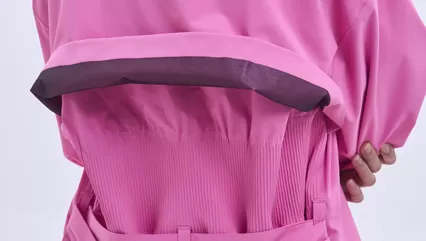
Outdoor garments may require waterproofing, washing resistance, low-temperature flexibility, and durable bonding. PU or TPU hot melt adhesive film is often used depending on fabric structure and performance requirements.
For Footwear
Footwear bonding requires durability under bending, pressure, moisture, and abrasion. TPU film is widely used for uppers, reinforcements, logos, laminates, and seamless shoe components.
For Embroidery Patches and Labels
PES, PA, and EVA films are commonly used for patches, badges, labels, and decorative elements. The choice depends on washing resistance, bonding temperature, fabric type, and required stiffness.
3. Check Activation Temperature
Activation temperature is one of the most important parameters. If the temperature is too low, the adhesive will not fully melt. If the temperature is too high, the fabric may shrink, discolor, deform, or lose coating performance.
| Temperature Requirement | Recommended Consideration |
|---|
| Heat-sensitive fabric | Use low-temperature adhesive film and test carefully |
| Thick fabric or foam | May need longer pressing time or higher heat transfer |
| Stretch fabric | Avoid excessive heat that damages elasticity |
| Coated waterproof fabric | Temperature must not damage the coating or membrane |
| High-wash garment | Film must activate fully to achieve stable bonding |
4. Evaluate Washing and Dry-Cleaning Requirements
For garments and textile products, washing resistance is a core quality factor. Some films bond well at first but delaminate after repeated washing, drying, detergent exposure, or flexing.
For washable garments, buyers should test:
Initial peel strength
Peel strength after washing
Bonding after tumble drying if required
Resistance to detergent and sweat
Appearance after repeated laundering
Fabric shrinkage or distortion after bonding
For dry-cleaning garments, PA adhesive film may be considered because selected PA films can offer good dry-cleaning resistance. However, testing is still required with the actual fabric and cleaning conditions.
5. Choose the Right Thickness
Hot melt adhesive film thickness affects bonding strength, softness, cost, and appearance. A thicker film can provide more adhesive volume and stronger gap filling, but it may make the fabric feel stiff. A thinner film gives a softer hand feel but may not be enough for rough, porous, or uneven materials.
| Film Thickness | Best Use | Notes |
|---|
| Thin film | Lightweight fabrics, seamless underwear, soft apparel | Better hand feel, but requires good surface contact |
| Medium thickness film | Sportswear, labels, patches, general fabric bonding | Balanced bonding strength and flexibility |
| Thick film | Foam, leather, rough fabrics, reinforcement bonding | Stronger bonding, but may increase stiffness and cost |
6. Consider Hand Feel and Elasticity
For apparel worn close to the body, hand feel is as important as bonding strength. If the adhesive film is too stiff, the garment may feel uncomfortable and lose market value.
For underwear, yoga wear, cycling apparel, running garments, compression wear, and seamless sportswear, TPU hot melt adhesive film is often selected because it supports softness and stretch. For patches, labels, and structural bonding, a firmer film may be acceptable or even preferred.
7. Match the Processing Method
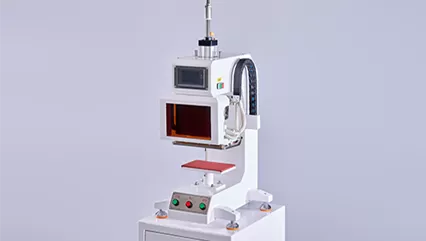
Hot melt adhesive film can be applied by heat press, flatbed lamination, roller lamination, ultrasonic-assisted bonding, cutting and positioning, or automated bonding systems. The film must match the production method.
Heat press: Common for patches, labels, samples, and small-batch production.
Roller lamination: Suitable for continuous fabric lamination and larger production volumes.
Cut-and-bond process: Used for seamless garment panels and shaped adhesive pieces.
Hot-air bonding: Used in selected garment and footwear applications.
Automated seamless production: Requires stable film thickness, accurate cutting, and consistent activation.
TPU vs PES vs PA vs EVA Hot Melt Adhesive Film
| Selection Factor | TPU Film | PES Film | PA Film | EVA Film |
|---|
| Softness | Excellent | Medium | Medium | Soft to medium |
| Elasticity | Excellent | Low to medium | Low to medium | Medium |
| Wash Resistance | Good to excellent | Good | Good | Moderate |
| Bonding Strength | Strong on suitable materials | Strong on many textiles | Strong on selected fabrics and accessories | Moderate to good |
| Cost | Medium to high | Medium | Medium | Lower |
| Best Use | Seamless garments, stretch fabrics, footwear | Textile lamination, labels, patches | Patches, labels, dry-cleaning applications | Basic bonding, cost-sensitive products |
Recommended Hot Melt Adhesive Film by Application
| Application | Recommended Film | Why It Works |
|---|
| Seamless underwear | TPU hot melt adhesive film | Soft, elastic, comfortable, suitable for skin-contact garments |
| Sportswear and yoga wear | TPU film | Good stretch recovery and washing resistance |
| Waterproof jackets | PU or TPU film | Flexible bonding and compatibility with waterproof textiles |
| Footwear uppers | TPU film | Durable under bending and movement |
| Embroidery patches | PES, PA, or EVA film | Stable bonding to fabric and decorative components |
| Garment labels | PES, PA, or TPU film | Depends on label material, washing requirement, and hand feel |
| Interlining and textile lamination | PES or PA film | Good dimensional stability and textile bonding |
| Protective clothing | PU, TPU, or PA film | Selection depends on fabric and performance standard |
Common Problems When Choosing the Wrong Adhesive Film
Delamination After Washing
Delamination usually happens when the film is not compatible with the fabric, the activation temperature is too low, the pressing time is too short, or the film does not meet the required washing standard.
Stiff Hand Feel
If the film is too thick or the polymer type is too rigid, the bonded area may feel hard. This is especially unacceptable for underwear, sportswear, softshell garments, and seamless apparel.
Fabric Damage During Heat Pressing
Heat-sensitive fabrics may shrink, melt, discolor, or develop gloss marks if the activation temperature is too high. Low-temperature adhesive film may be required.
Weak Edge Bonding
Weak edges can result from insufficient pressure, uneven fabric surface, poor cutting accuracy, or adhesive film that is too thin for the substrate.
Yellowing or Appearance Change
Some adhesive films may yellow under heat, aging, or washing conditions. This is important for white fabrics, light-colored garments, labels, and visible bonding areas.
How to Test Hot Melt Adhesive Film Before Bulk Production
Testing should use the actual fabric, actual production method, and actual performance requirements. A film that passes a simple hand peel test may still fail during washing or long-term use.
Recommended Testing Process
Prepare the actual fabric and accessory materials.
Apply the adhesive film using planned temperature, pressure, and time.
Check whether the fabric is damaged after bonding.
Test initial peel strength after cooling.
Wash the bonded sample according to garment requirements.
Check peel strength after washing.
Test stretching and recovery if used on elastic fabric.
Check hand feel, thickness, color change, and edge stability.
Repeat testing under mass-production conditions before final approval.
Important Processing Parameters
| Parameter | Why It Matters | Common Risk |
|---|
| Temperature | Activates the adhesive film | Too low causes weak bonding; too high damages fabric |
| Pressure | Ensures contact between film and fabric | Low pressure causes poor adhesion or edge lifting |
| Time | Allows heat to transfer through materials | Short time causes incomplete melting; long time may damage fabric |
| Cooling | Stabilizes the adhesive bond | Moving parts too early may weaken the bond |
| Film Thickness | Affects bonding strength and hand feel | Too thick feels stiff; too thin may not bond rough surfaces |
Cost Considerations for Buyers
Hot melt adhesive film cost is influenced by polymer type, thickness, width, release paper, special performance requirements, color, MOQ, and customization. However, buyers should evaluate total cost, not only material price per meter or per square meter.
A cheaper film may increase total cost if it causes:
For low-value textile products, EVA or standard adhesive film may be economical. For premium garments, footwear, sportswear, and protective clothing, a higher-performance TPU, PU, PES, or PA film may provide better long-term value.
What Information Should You Provide to a Supplier?
To receive an accurate recommendation, do not only ask for “hot melt adhesive film for fabric.” Provide details about your fabric, process, and final product requirement.
Fabric composition and coating type
Bonding material on both sides
Application: garment, footwear, label, patch, lamination, reinforcement, or seamless bonding
Required softness and stretch level
Washing or dry-cleaning requirement
Heat sensitivity of the fabric
Processing method: heat press, lamination, hot air, or automated bonding
Required film thickness, width, and roll size
Color or transparency requirement
Target bonding strength or testing standard
FAQ: Hot Melt Adhesive Film for Fabric
What is the best hot melt adhesive film for fabric?
The best film depends on the fabric and application. TPU film is often best for soft, elastic, washable garments. PES and PA films are suitable for many textile bonding, label, patch, and interlining applications. EVA film is more economical for basic bonding needs.
Is TPU hot melt adhesive film suitable for stretch fabric?
Yes. TPU hot melt adhesive film is commonly used for stretch fabric because it offers good elasticity, softness, and recovery after movement. It is widely used in seamless garments, sportswear, underwear, and footwear.
Why does hot melt adhesive film peel off after washing?
Peeling after washing may be caused by wrong film selection, insufficient activation temperature, short pressing time, low pressure, fabric incompatibility, or washing conditions beyond the film’s performance range.
Can hot melt adhesive film replace sewing?
It can replace sewing in selected areas, especially in seamless garments, hems, bonded edges, labels, patches, and reinforcements. However, it may not replace sewing for every structural seam, especially where high mechanical strength is required.
What thickness should I choose?
Use thinner film for soft and lightweight garments, medium thickness for general textile bonding, and thicker film for rough surfaces, foam, leather, or reinforcement bonding. The correct thickness should balance bonding strength, hand feel, and cost.
Can hot melt adhesive film be used on waterproof fabric?
Yes, but the film must be compatible with the coating or membrane. PU and TPU films are commonly used for waterproof textiles, but sample testing is necessary to confirm adhesion and avoid coating damage.
Do different adhesive films require different temperatures?
Yes. TPU, PU, PES, PA, EVA, and PO films have different activation temperature ranges. Processing parameters must be adjusted according to the film type and fabric heat resistance.
Final Recommendation
For soft, stretch, washable, and premium garment applications, TPU hot melt adhesive film is often the most practical choice. For embroidery patches, garment labels, interlining, and stable textile lamination, PES or PA adhesive film may be more suitable. For cost-sensitive or basic fabric bonding, EVA film can be considered if performance requirements are not too demanding.
Before bulk purchasing, test the film with the actual fabric, real bonding process, and required washing conditions. A reliable supplier should help you match film type, thickness, activation temperature, roll specification, and processing method to your product application. Correct selection at the sample stage can prevent delamination, poor hand feel, fabric damage, and costly production failures.
 中文
中文 English
 français
 Deutsch
 tiếng việt
 Indonesia
 বাঙালি